Minimalist summer clothing: Style and quality guide | SHON MOTT
Heat has a curious way of reminding us what is unnecessary. As temperatures rise, every excess detail or synthetic fiber becomes a burden. This is where minimalist summer clothing comes into play: a philosophy that goes beyond aesthetics, grounded in ease and air.
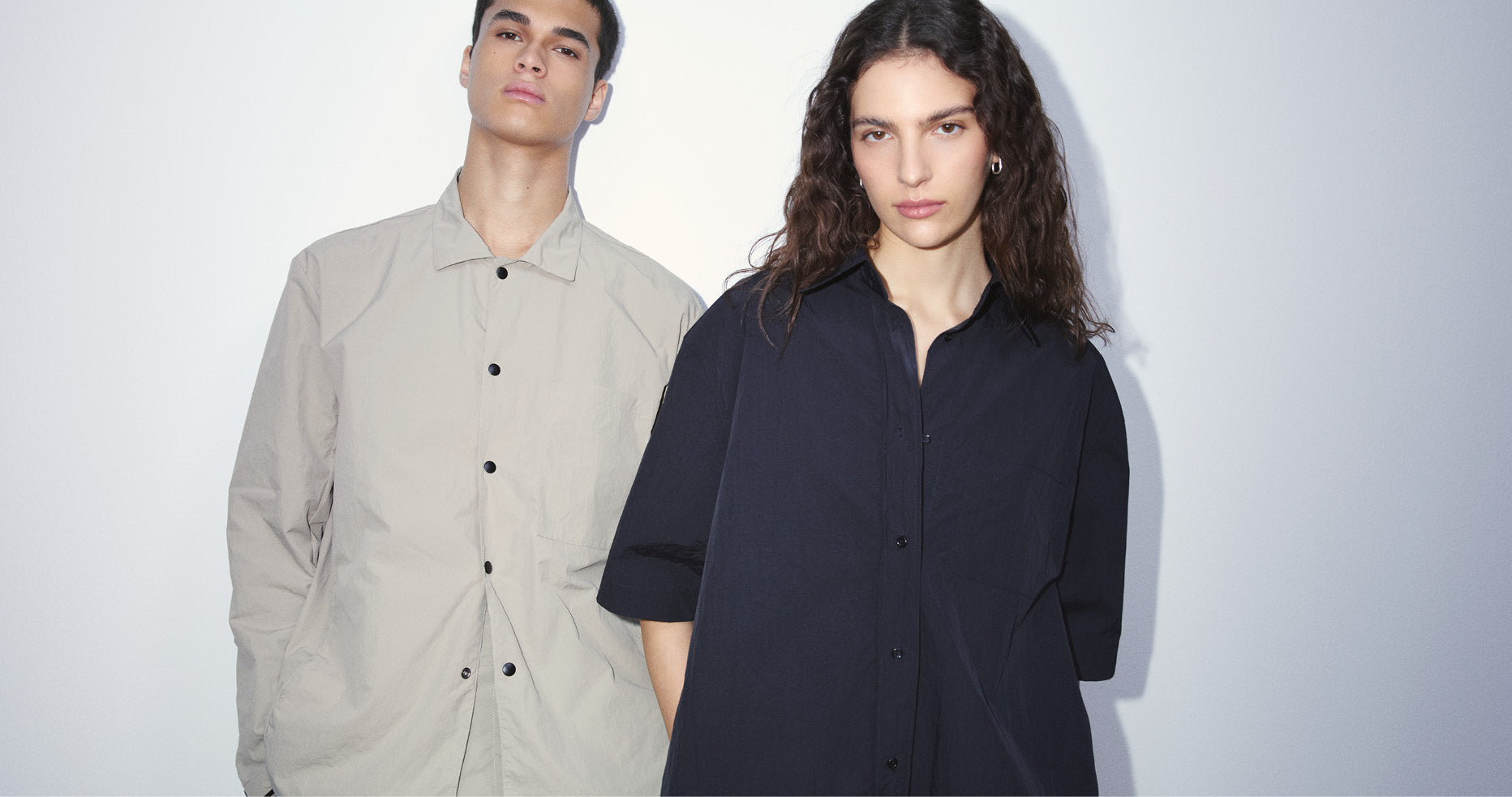
At SHON MOTT, we understand that dressing well in August should not feel like a negotiation with the climate. It is about choosing pieces that are barely felt against the skin. Silhouettes that move naturally and colors that soften the eye, inspired by Mediterranean light.
For us, simplicity is the result of a deeply considered process. It is not about doing less, but about doing precisely what is needed, in the best possible way. A search for balance that exists beyond seasonal shifts.
SHON MOTT philosophy: From textile heritage in Barcelona to purity of design
Our story did not begin in a marketing office, but in a workshop. Brothers Lluis, Kiko and Pep Buxó founded SHON MOTT in 2015, carrying with them generations of textile tradition rooted in Barcelona.
Producing in Spain allows us something essential: proximity to the material. We understand each fabric, every stitch, and the origin of every thread. It is a commitment to a slower way of producing, ensuring that a piece remains intact over time.
Today, our spaces in Madrid, Paris and Lisbon offer a sense of calm. Environments where marble and wood coexist with a collection designed for those who value clarity in both price and quality.
Material science: Noble fibers for summer comfort
Why do some shirts feel heavy while others remain light? The answer lies in the structure of the fiber. In summer, fabric is not an accessory—it is a system of regulation.
At SHON MOTT, materials are selected with intention. The goal is to feel dry, light, and balanced, regardless of humidity or heat.
Linen as a natural regulator
Linen remains central during warmer months. Its structure allows air to circulate freely, functioning as a natural ventilation system. It does not retain heat—it releases it.
It can absorb up to 20% of its weight in moisture without feeling damp, making it ideal for pieces like linen trousers.
Its characteristic crease is not a flaw, but a reflection of a material that responds and evolves with use.
Organic cotton and fine gauge cashmere
Our organic cotton is cultivated without aggressive chemicals, resulting in a softer fiber that remains gentle on the skin.
Cashmere, even in summer, finds its place when developed in ultra-fine gauges. Reduced in weight, it becomes a second layer—light, breathable, and adaptable.
Women’s clothing: silhouettes that move with ease
For women, minimalism is an invitation to versatility. Pieces are designed to function across different moments of the day, without transition.
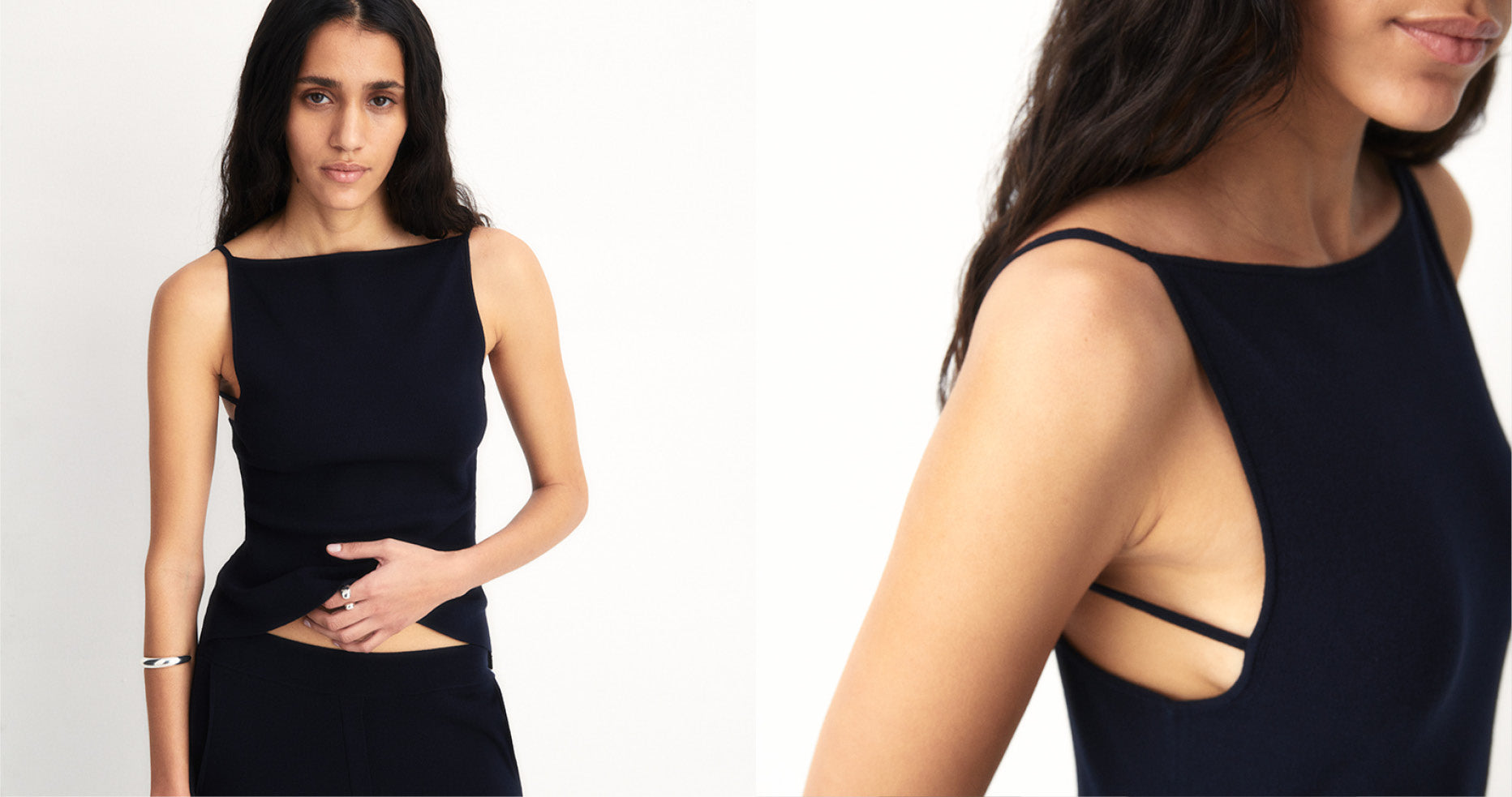
Our women’s clothing is defined by clean lines and fluid forms. The intention is not to impose shape, but to accompany movement.
The Fuji dress remains one of the most recognizable pieces. A simple structure, precisely executed, capable of holding presence without excess.
Cotton jumpsuits and silk blouses also stand out—pieces that resolve decisions quickly while maintaining a quiet sophistication.
Men’s clothing: structure without rigidity
Minimalism for men is expressed through clarity without stiffness. In our men’s clothing, unnecessary linings and internal constructions are removed.
A blazer should feel closer to a shirt. The objective is freedom of movement while maintaining a defined silhouette.
Ultralight cotton polos and raglan-sleeve T-shirts form the foundation of this approach. Pieces that function over time, without drawing attention to their construction.
For more relaxed settings, sailing shorts and Fuji trousers create a transition between urban and coastal environments, always within a restrained palette.
The capsule wardrobe method: building a considered selection
Having more clothing does not necessarily mean having more options. Excess often leads to visual noise. A capsule wardrobe offers a different approach: fewer pieces, chosen with intention.
The focus shifts from quantity to quality. A limited number of garments can create multiple combinations when the palette remains coherent.
To begin:
-
Remove what no longer aligns with your daily use
-
Define essential pieces: white T-shirts, straight trousers, a linen shirt, a versatile dress
-
Work with neutral tones: white, beige, grey, navy
-
Prioritize materials that maintain their structure over time
|
Key Piece |
Material |
Use |
|
Basic T-shirt |
Organic cotton |
Everyday |
|
Linen shirt |
Pure linen |
Light structure |
|
Chino trousers |
Cotton/stretch |
Urban versatility |
|
Shirt dress |
Cotton poplin |
Adaptable use |
Health and sustainability: the role of natural fibers
Choosing natural materials is not only a matter of preference, but also of well-being. Synthetic fibers tend to retain bacteria and generate static.
Organic cotton and linen allow the skin to remain balanced, reducing irritation and supporting breathability.
Their environmental impact is also reduced. Linen requires less water than conventional cotton and remains fully biodegradable.
Local production further limits transportation impact. A garment designed to last is, ultimately, the most responsible choice.
2026 outlook: evolving minimalism
Looking ahead, minimalism shifts toward softer, more organic forms. Shades like off-white tones will become more present.
Volume returns in a controlled way—through relaxed trousers and fluid silhouettes that maintain balance without excess.
Soft pinks and muted citrus tones begin to integrate into neutral palettes, adding subtle variation without disrupting coherence.
At SHON MOTT, the direction remains unchanged: creating pieces that do not rely on visibility, but on presence. The future moves toward what is lasting, balanced, and human.