Article: What Is Tencel Fabric? Characteristics & Uses | SHON MOTT

What Is Tencel Fabric? Characteristics & Uses | SHON MOTT
What Is Tencel? Characteristics and Uses of Tencel Fabric in Clothing
The name Tencel is appearing more and more often on the labels of shirts, trousers, T-shirts and other garments. Its soft feel and fluid drape make it easy to recognise when worn, although it is not always so clear what kind of material it is or where it comes from.
Tencel is a cellulosic fibre made from wood. More precisely, TENCEL™ is a registered trademark of the Austrian company Lenzing and mainly includes two types of fibre: TENCEL™ Lyocell and TENCEL™ Modal. Both are made from wood-based cellulose and are used in clothing as well as home textiles.
In clothing, Tencel is particularly interesting because of its unusual combination of qualities: it is lightweight and soft to the touch, manages moisture well and can be used to create fabrics with very different movements and finishes. This is why it can be found in everything from a summer shirt to trousers, T-shirts and even denim garments.
What exactly is Tencel fabric?
To understand what Tencel is, we first need to look at wood. A cellulose-rich pulp is extracted from it and then processed to create textile fibres. The result belongs to the family of regenerated cellulosic fibres: the raw material comes from nature, but it requires an industrial process before it can become yarn.
In the case of TENCEL™ Lyocell, Lenzing uses a closed-loop process in which more than 99.8% of the solvent used is recovered and returned to the production cycle. According to the manufacturer, the wood used to produce TENCEL™ fibres comes from controlled or certified sources under FSC® or PEFC standards.
This helps explain why Tencel often appears when discussing sustainable fabrics. Even so, it is worth checking the full composition of each garment: seeing Tencel on a label does not necessarily mean that the entire fabric is made from this fibre.
Are Tencel and Lyocell the same thing?
This is one of the most common questions, and the short answer is not exactly.
Lyocell is the generic name for a type of cellulosic fibre. TENCEL™ Lyocell, on the other hand, is lyocell produced by Lenzing under its TENCEL™ brand and according to its own processes and standards. In other words, TENCEL™ can be Lyocell, but not all lyocell available on the market is TENCEL™.
The brand also includes TENCEL™ Modal, another cellulosic fibre produced using a different process. For this reason, when a label mentions Tencel, it is worth checking whether the garment contains Lyocell, Modal or a blend with other fibres.
Characteristics of Tencel fabric in clothing
One of the reasons Tencel fabric works so well in clothing is its feel. TENCEL™ Lyocell and Modal fibres have a smooth, soft surface, something that is particularly noticeable in shirts, T-shirts and garments worn directly against the skin for long periods of time.
Another notable characteristic is moisture management. The structure of these fibres allows them to absorb and release moisture, helping maintain a dry sensation and supporting the breathability of the fabric.
From a design perspective, however, its versatility may be its most interesting quality. Tencel can have a lightweight, fluid drape, a silky finish or form part of fabrics with greater structure. The final result depends on how the fibre is worked, the fabric weight and construction, and whether it is used alone or blended with other materials.
What types of clothing are made from Tencel?
The answer is quite broad. Tencel clothing can include shirts, blouses, T-shirts, trousers, dresses, underwear and even denim. The fibre can be used across everyday garments, activewear, underwear, footwear and denim fabrics.
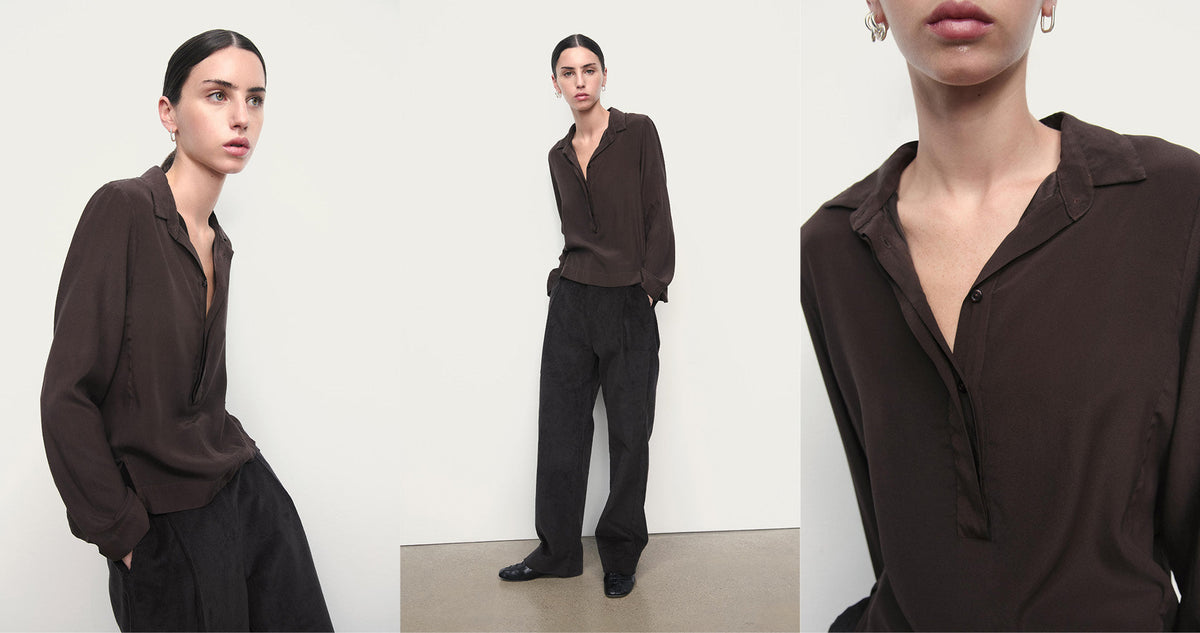
Its lightness makes it particularly suitable for relaxed garments or pieces with more fluid constructions. One example from SHON MOTT is the ultralight short-sleeve shirt made from Tencel. Made from 100% Tencel, it uses the softness and lightness of the material to create a relaxed silhouette.
In Tencel trousers, the fibre can provide movement without necessarily making the garment look informal. Something similar happens with T-shirts: the soft feel and ability to manage moisture make it particularly comfortable when worn directly against the skin.
Tencel vs cotton: two fibres with different qualities
Tencel and cotton can occupy similar spaces in a wardrobe, but they do not feel the same. Cotton usually has a more familiar touch and can vary considerably depending on the type of yarn, fabric weight and weave used. Tencel tends to offer a smoother surface and a more fluid drape.
There is little reason to treat them as competing materials. Each behaves differently and they can also be blended together. The choice depends on the effect required: a 100% cotton T-shirt, a lightweight Tencel shirt or a blended fabric can behave very differently even when all three garments share a simple silhouette.
Across the SHON MOTT women’s collection, different fibres and constructions coexist, from cotton to silk, cashmere, wool and linen. This variety helps show how the material itself influences the drape, feel and final presence of each garment.
Does Tencel have any disadvantages?
Discussing the disadvantages of Tencel requires some context, because Tencel is a fibre rather than a finished fabric with one single set of characteristics. Its behaviour changes depending on the construction, finish and the fibres it is blended with.
One factor to consider is care. Some garments made with Tencel may require low washing temperatures and should be kept away from intense heat. This is not an identical rule for every garment, so the specific care label should always be checked. For example, SHON MOTT’s 100% Tencel shirt recommends washing at a maximum of 30°C, avoiding tumble drying and following specific ironing instructions.
It is also useful to distinguish between a garment made with certified TENCEL™ and one that simply uses the term lyocell. Although they belong to the same family of fibres, the specific processes or certifications associated with Lenzing cannot automatically be attributed to every lyocell product.
How to care for Tencel clothing
There is no single washing instruction that applies to every Tencel garment. A lightweight shirt may require different care from a pair of trousers or a fabric blended with cotton. The composition and care label should always be the first point of reference.
As a general rule, it is worth avoiding unnecessarily high temperatures and aggressive treatments, especially with lighter garments. Careful washing helps preserve the feel, shape and surface of the fabric for longer.
The same principle applies to other fibres. In knitwear, for example, cotton and cashmere behave very differently. The selection of women’s sweaters and sweatshirts from SHON MOTT shows how different materials respond to different needs in terms of weight, texture and warmth.
Tencel is also used in home textiles
Although we often find it in clothing, its uses extend beyond the wardrobe. TENCEL™ Lyocell and Modal fibres are also used in bed linen, bathroom textiles, upholstery and other home products. Their softness and ability to manage moisture help explain many of these applications.
This is actually a useful way to understand the fibre: its properties are not tied to one particular type of garment. What changes is the construction of the fabric. A bedsheet and a shirt may use fibres from the same family and still feel completely different.
How to tell if a garment is really made from Tencel
The simplest way is to check its composition label. This will tell us whether it contains TENCEL™ Lyocell, TENCEL™ Modal, Tencel blended with another fibre or a specific percentage of lyocell.
It is also useful to separate the name of the material from the final characteristics of the garment. Two shirts made from Tencel can have very different weights, drapes or textures. The pattern and construction matter just as much as the fibre itself.
Understanding the composition makes it easier to choose garments with more information. Tencel makes sense when looking for soft, lightweight fabrics with good moisture management, but it is part of a much broader range of fibres. Cotton, linen, wool, cashmere, silk and Tencel all behave differently; understanding those differences is a simple way to know more about what we wear.