Quality Clothing: How to Recognize Lasting Pieces | SHON MOTT
Talking about quality clothing means talking about materials, construction and use. It is not only about how a garment looks when you buy it, but how it responds over time: whether it keeps its shape, holds its colour, follows the body naturally and still makes sense in your wardrobe after many wears.
At a time when clothing is often bought quickly, learning how to recognize a good garment is a way of choosing better. Quality is usually found in quiet details: the composition of the fabric, the precision of the seams, the inner finish, the drape or the way a piece allows movement without losing its form.
That is why, when someone wonders where to buy quality clothing, it is worth looking beyond the price. A well-made garment does not need to impose itself. Its value appears through use.
What quality clothing really means
Quality clothing is born from the balance between design, material and construction. A cotton T-shirt, a white shirt, a clean-cut pair of trousers or a dress made from natural fabric may seem simple, but their difference lies in the way they are made.
The first sign is the composition. Fibres such as cotton, linen, silk, wool or cashmere can offer softness, breathability and resistance when they have been carefully selected and properly worked. But reading the label is not enough. Fabric weight, density, finish and pattern also matter.
Cotton can be light and stable. Linen can wrinkle naturally and still keep a beautiful drape. High-quality silk is recognized by its touch, movement and lightness. The material speaks, but it has to be observed.
How to recognize quality clothing
To identify quality clothing before buying, it is useful to look at five aspects: fabric, seams, drape, finishes and design coherence.
The fabric should feel consistent. Not necessarily thick, but stable. If a garment does not recover its shape after being gently stretched, it may deform with use. In knitwear, this fabric memory is especially important.
Seams also say a lot. A well-made garment has regular stitching, clean finishes and lines that do not twist. It is worth checking areas such as shoulders, armholes, waist, hem and collar, as these are the points where the garment holds more tension.
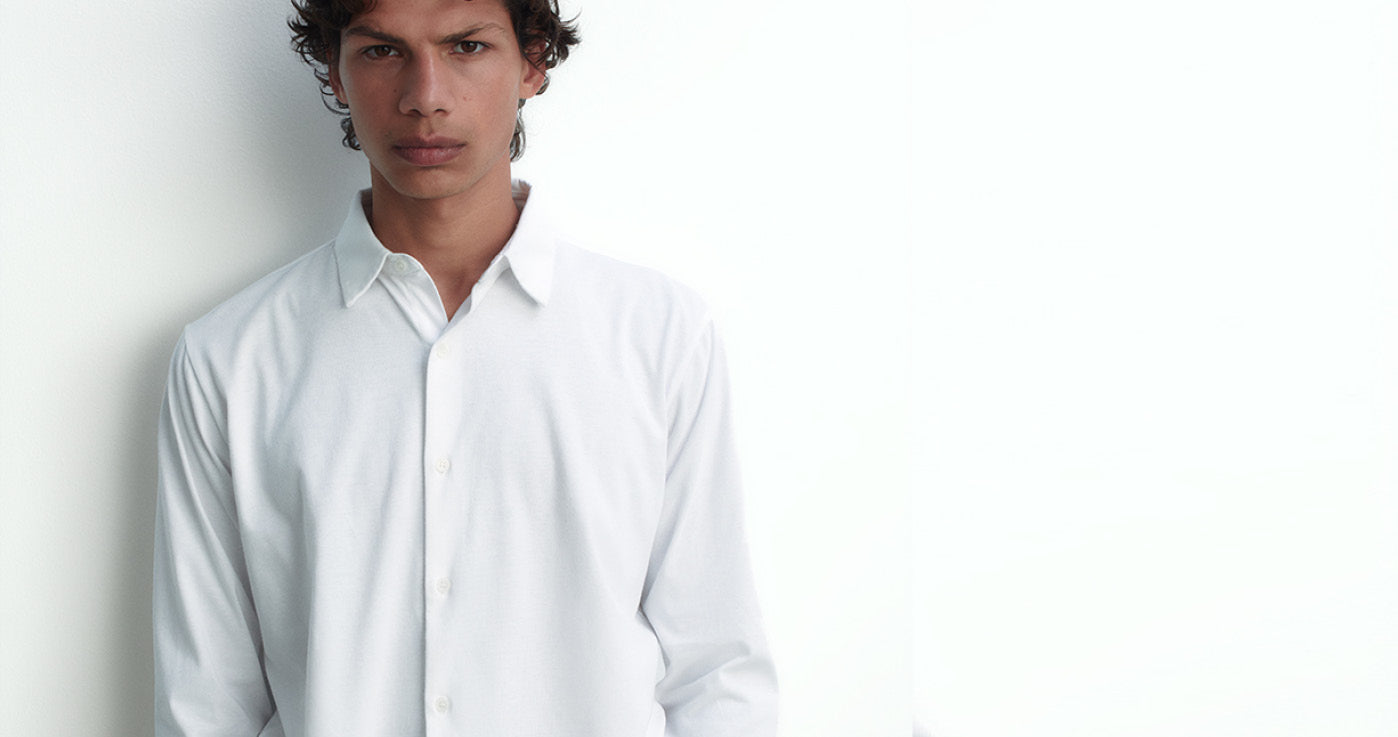
Drape is another essential indicator. A good garment follows the body without forcing it. In a shirt, this can be seen in the shoulder line and the width across the back. In trousers, in the rise, waist and movement of the leg. In a dress, in the way the fabric falls without creating unnecessary tension.
Interior finishes complete the reading: hems, buttons, zips, linings and joins reveal the real care behind a piece. Very often, quality is found in what is not immediately visible.
Quality basics for a better wardrobe
Quality basics are not pieces without character. They are garments that support many combinations and help build a coherent wardrobe. A good T-shirt, a cotton shirt, straight trousers, a knit jumper or a simple dress can move through different moments of the day without losing their natural presence.
The key is that each garment has a clear function. A T-shirt should feel soft, breathable and keep its neckline in place. A shirt should offer structure without feeling hard. Trousers should allow movement and keep their shape. A dress should resolve the silhouette calmly, without depending on decoration.
At SHON MOTT, this idea is reflected in a selection of women’s clothing built around clean lines, a neutral palette and fabrics designed to remain in use. Pieces that do not respond to a passing moment, but to a slower way of choosing.
Women’s quality clothing: comfort and proportion
When we talk about women’s quality clothing, we are not only referring to garments that look flattering. We are talking about proportion, comfort and the relationship between fabric and body.
A good garment should not twist, open, become more transparent than expected or lose its structure after only a few hours of wear. Comfort is not a secondary detail: it is proof of design.
Women’s T-shirts and tops, for example, reveal this difference clearly. In a simple piece, the pattern, neckline, sleeve, cotton and hem finish determine how it will behave throughout the day. The same happens with women’s blouses and shirts: good construction is perceived in the fall of the collar, the volume of the sleeve and the texture of the fabric.
Quality clothing does not try to impose itself. It is recognized because it works.
Materials and care: two keys to lasting garments
Material is the physical origin of every garment. Understanding a few concepts can help you choose better. Fabric weight influences drape and resistance. Yarn twist can affect the uniformity of the textile. Fibre length, especially in cottons and wools, can improve softness and reduce the appearance of pilling.
But durability also depends on care. Even a well-made garment needs attention. Washing less, and washing better, is often the first step. Many pieces do not need a full wash after every wear; sometimes airing them properly is enough.
It is also important to follow the care label, avoid very high temperatures and reduce tumble drying. In natural fibres, excess heat can alter the structure. Knitwear is best dried flat to prevent stretching. Storage also matters: knitted pieces usually keep better when folded, while shirts benefit from hangers that respect the shoulder line.
Caring for a garment means continuing its process. Quality does not end when a piece is bought; it is preserved with every use.
Where to buy quality clothing
To know where to buy quality clothing, look for brands that explain which materials they use, how their garments are constructed and what kind of design they propose. Transparency in composition, coherence across collections and attention to origin are important signs.
It is also worth choosing pieces that can speak to each other. When a brand maintains a clear palette, clean lines and consistent materials, it becomes easier to build a wardrobe where each garment has purpose and continuity.
SHON MOTT comes from a deep relationship with textiles and a way of designing from the essential. Its garments are conceived in Barcelona, with attention to fabrics, cut and function. In categories such as dresses and jumpsuits or the new women’s collection, this search for balance between softness, structure and everyday presence can be seen.
Quality is perceived through use
Quality clothing does not always need to be explained at length. It is perceived in the texture of cotton, in the fall of silk, in the right weight of knitwear or in a seam that remains stable.
Choosing better means looking more calmly: touching the fabric, reading the composition, observing the finishes and thinking about the real use of each garment.
At SHON MOTT, quality is understood as a way of building from the material. Fabrics that accompany. Shapes that find balance. Design and comfort in harmony.