How to dress in between seasons: practical outfits for changing weather
There are days when getting dressed feels like a small guessing game. It’s cool in the morning, warm at midday, and chilly again in the evening. If you’ve ever stood in front of your wardrobe thinking “what should I wear today?”, you were probably dealing with that in-between season.
Learning how to dress in between seasons isn’t really about having more clothes. It’s about choosing better. Understanding what works when the weather shifts throughout the day. And most importantly, building outfits that don’t force you to constantly adjust what you’re wearing.
Because in the end, the goal is simple: to feel comfortable all day without overthinking it.
What dressing for in-between seasons really means (and why it’s tricky)
The in-between season is that moment when it’s neither properly cold nor properly warm. Spring and autumn are the obvious examples, but it can happen at any time.
The challenge is that there isn’t a single temperature guiding your outfit. The day evolves, and so do your needs. That’s why it’s easy to get it wrong: we dress for the moment we leave the house, not for how the day will unfold.
Dressing for this kind of weather means accepting that variability. Not trying to control it, but adapting to it.
The key: layering (without overcomplicating it)
If there’s one idea that almost always works in between seasons, it’s this: layers.
But this doesn’t mean piling on clothes without thinking. The goal is to choose layers you can easily add or remove without breaking the outfit.
A good base is usually a light T-shirt or shirt. On top of that, a mid-layer—like a lightweight knit or one versatile vest for transitional weather— and, if needed, a light outer layer.
The important thing is that each layer works on its own. If you take one off, the look should still make sense.
Key pieces for transitional weather
You don’t need a whole new wardrobe to dress well in between seasons. In fact, it’s usually the same pieces that keep working every year.
Shirts: the base that never fails
Shirts are one of the most reliable options for transitional weather. Not too warm, not too light—they sit right in the middle.
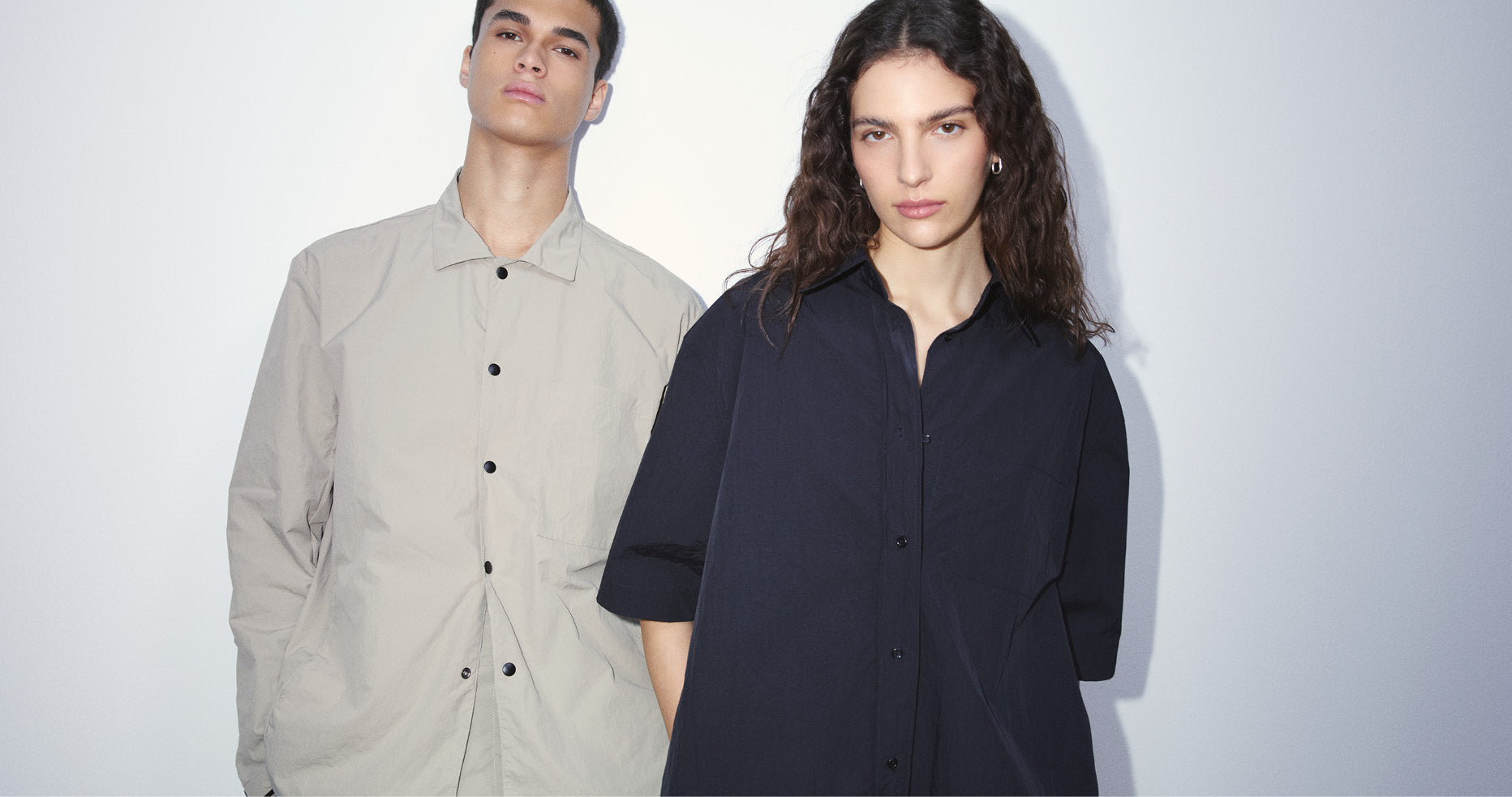
You can wear them on their own when the day warms up or use them as a layer when it gets cooler. Worn open over a T-shirt, they create a relaxed look without trying too hard.
Lightweight jackets: balance without excess
Lightweight jackets often hit that perfect middle point. They don’t overheat you, but they offer enough protection when the temperature drops.
A good jacket in a neutral tone can carry you through the entire season. It becomes one of those pieces you reach for without thinking, like many of these lightweight jackets designed for everyday wear.
Vests: the most flexible layer
Vests are probably one of the most useful pieces for in-between seasons, even if they’re sometimes overlooked.
They add warmth without restricting movement and allow you to adjust your outfit without making it feel heavy. They work especially well when it’s not cold enough for a jacket, but you still need an extra layer.
Versatile trousers: neither too light nor too heavy
In transitional weather, extremes don’t work well. Fabrics that are too thin or too heavy tend to feel uncomfortable as the day changes.
Cotton trousers, chinos, or slightly structured fabrics are usually a safe choice. They adapt well to temperature shifts without becoming restrictive—especially when you’re wearing trousers designed for everyday versatility.
How to dress in between seasons without losing your sense of style
One of the most common mistakes is thinking that dressing for changing weather means sacrificing style for practicality.
In reality, when you choose the right pieces, the opposite happens.
Transitional outfits often feel more interesting because they include layers, subtle contrasts, and combinations you don’t usually see in other seasons.
This is where neutral colors become especially useful. Shades like beige, grey, white, or navy make it easier to combine pieces without the outfit feeling disjointed.
If you explore collections like those at SHON MOTT, you can see this approach clearly: garments that naturally work together without requiring much thought.
Easy outfit ideas for in-between seasons
Beyond theory, what really helps is having a few reliable combinations in mind.
Look 1: simple base + light layer
A basic T-shirt, straight trousers, and a shirt or lightweight jacket.
It’s an easy combination you can adjust throughout the day by adding or removing layers.
Look 2: shirt + vest
A great option when it’s not quite cold enough for a jacket.
The shirt builds the base, while the vest adds just enough warmth without overwhelming the look.
Look 3: neutral trousers + layered top
A pair of neutral trousers combined with multiple layers on top (T-shirt + shirt or lightweight knit).
It works because the base stays stable while you play with the upper layers.
Common mistakes when dressing for transitional weather
There aren’t strict rules, but there are a few common missteps.
The first is over-layering. Too many pieces or heavy garments can make you feel uncomfortable as the day progresses.
The second is not thinking ahead. Dressing only for the temperature when you leave the house often leads to discomfort later.
And the third, maybe the most important, is choosing pieces that don’t work together. When layers don’t align, the outfit falls apart as soon as you remove one.
Dressing for in-between seasons without overthinking it
One of the biggest lessons here is that you don’t need to make it complicated.
When you have a few reliable pieces—shirts, lightweight jackets, vests, versatile trousers—everything becomes easier.
Outfits come together naturally. You don’t need to try too many combinations or change multiple times before leaving.
And in everyday life, that makes a difference.
Conclusion: adapting instead of controlling
Dressing in between seasons isn’t about getting it perfect every time. It’s about being prepared for change.
Choosing clothes that adapt to you, not the other way around. Building outfits that can evolve throughout the day without losing their balance.
Because in the end, knowing how to dress in between seasons isn’t really about fashion.
It’s about finding that sense of balance where everything just works.